
Your septic tank keeps your home’s wastewater treatment safe and self-contained. Staying current on inspections and routine septic tank pumping prevents backups, soggy yards, and costly repairs. If your home uses its own septic system rather than a municipal sewer, septic maintenance, including septic tank pumping, is one of the wisest investments you can make. Superior Drainage makes septic care simple and stress-free with our licensed, insured professionals.
Call (330) 733-3711 to schedule service or an appointment for septic tank pumping.
How Often Should You Have Your Septic Tank Pumped?
Short answer: most homes benefit from an annual inspection and septic tank pumping once every three to five years. The specific schedule depends on tank size, household size, water use, and whether you run a garbage disposal or regularly host overnight guests.
During the annual inspection, a Superior Drainage technician will measure sludge and scum layers, visually inspect baffles and tees, confirm that the inlet and outlet ports are clear, and take note of the condition of the drain field. If solids levels are higher than expected or we observe early warning signs, we will recommend septic tank pumping sooner.
What can change your septic tank pumping frequency?
- Household size: Larger families means a faster build-up of solids in the tank.
- Garbage disposals: Extra food waste translates to more solids and grease.
- Laundry, long showers: High volumes of water can help solids move toward the outlet.
- Short-term spikes: Parties, overnight houseguests, or a home-based business can put sudden extra stress on the system.
What should you keep out of the system?
In addition to avoiding dumping fats and chemicals, don’t flush or drain anything that won’t easily break down. That includes feminine hygiene products, wipes (even flushable ones), paper towels, grease and oils, coffee grounds, paint, solvents, and cat litter. Items like these can clog your lines, upset the tank’s biology, and reduce the time between necessary pumpings. These habits reduce the need for emergency septic tank pumping.
Need a professional opinion? Call (330) 733-3711.
Ask about preventative septic tank pumping during your inspection.
Can You Pump a Septic Tank Yourself?
Theoretically, yes. But it’s rarely worth the effort or potential risk to your tank and soil. Septic tank pumping requires a vacuum truck with proper permits, safe disposal at an approved facility, and the knowledge and equipment to work safely around confined spaces and hazardous gases. The consequences of a DIY mistake include tank damage, soil contamination, and potential injury. Hiring Superior Drainage gives you trained specialists, commercial-grade equipment, guaranteed disposal at permitted facilities, and inspection documentation for your files and any future home sale.
What We Do During a Septic Tank Pumping
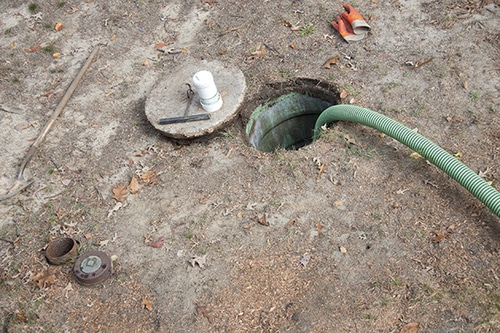
- Locate and uncover lids, then assess tank condition and visible components.
- Measure the sludge and scum layers to confirm or adjust pumping timing.
- Pump the tank completely, breaking up solids as needed for full removal.
- Rinse and backwash baffles and tees, checking for cracks or corrosion.
- Confirm the inlet and outlet are clear, inspect the distribution box (if accessible), and look for drain field stress signs.
- Review findings with you and provide a recommended window for next service.
Morning and afternoon appointments are available. Call (330) 733-3711 to book for septic tank pumping.
Why Choose Superior Drainage for Septic Tank Pumping
- Licensed and insured: Work is backed by professionals, your home and property are protected, and your tank gets inspected.
- Local expertise: We know Northeast Ohio soils, how our weather swings affect septic systems and older lateral lines.
- Straightforward pricing: No extras or surprises – just transparent recommendations and dependable work.
- Respect for your property: Clean setups and cleanup, careful lid replacement, and tidy yards during and after the job.
- One call for everything: Septic tank pumping, inspections, minor repairs, and recommendations for drain field care.
Local Service You Can Count On
You want a team that knows your street, your soil, and your weather patterns. Superior Drainage serves homeowners throughout Summit County and the surrounding Northeast Ohio communities, from classic Akron neighborhoods to nearby suburbs, villages, and townships. If you don’t see your area listed, give us a call—we’re always expanding our service areas.
Akron Neighborhoods and Corridors We Work In
From Highland Square and Wallhaven to Firestone Park, Goodyear Heights, North Hill, Kenmore, Ellet, Chapel Hill, Cascade Valley, Merriman Valley, Downtown/Central Interchange area, and East Akron, our crews are experienced in the challenges of clay and loam soils, older homes with legacy lateral lines, and what heavy rains do to this area’s combined runoff. Homes along corridors like I-76/I-77, SR-8, West Market Street, Dart Avenue, Waterloo Road, Arlington Road, Manchester Road, Tallmadge Avenue, Portage Path, and Howe Avenue have faster access and more flexible scheduling. If you’re located close to Sand Run, the Towpath Trail, or near the Akron Beltway interchange, we can help plan around traffic to get you a convenient service window.
Summit County Cities, Villages, and Townships
We regularly service septic systems in Cuyahoga Falls, Stow, Hudson, Barberton, Green, Tallmadge, Fairlawn, Twinsburg, Macedonia, Norton, Munroe Falls, Reminderville, and Peninsula. In the townships, we’re familiar with Bath, Copley, Coventry, Springfield, Sagamore Hills, Northfield Center, Richfield, Boston, and Twinsburg Township. Whether you’re near the lakes in Portage Lakes, on the hillsides in Richfield and Boston Heights, or in a subdivision throughout Copley and Bath, we know the terrain and typical tank placements.
Medina, Portage, and Stark County Spots We Visit Often
To the west, homeowners in Medina, Wadsworth, Brunswick Hills, and Lodi depend on our consistent pumping schedules to keep their older systems running reliably. Eastward, in Kent, Brimfield, Ravenna, Streetsboro, and surrounding Portage County areas, we see a range of tank sizes and newer lids that make service a fast process. Southward, into Stark County—North Canton, Jackson Township, Canal Fulton, Massillon, Canton, and Alliance—we plan our routes to account for commuter traffic and keep your appointment on time.
Unique Local Conditions We Plan Around
- Freeze-thaw cycles: Northeast Ohio winters can heave lids and shift soil. We check risers and seals to prevent infiltration.
- Heavy summer storms: Sudden downpours saturate clay-rich soils. We look for early warning signs of drain field stress like lush patches or slow drains.
- Mature trees: Root intrusion is common in older neighborhoods. We can recommend root-safe practices and schedule preventive checks.
- Mixed housing stock: From century homes in Highland Square to newer builds near Stow and Green, tank size and access vary—we bring equipment to match your property.
Wherever you live around Akron, Medina, Portage, or Stark counties, you’ll get timely, professional service and clear guidance to protect your home and soil.
Septic System Tips for Everyday Use
- Spread laundry over the course of the week; don’t do multiple back-to-back loads.
- Fix running toilets and dripping faucets to limit water shock to the system.
- Keep vehicles and sheds off the drain field to prevent soil compaction.
- Know where your lids are and keep them accessible year-round.
- Use septic-safe toilet paper and cleaners; avoid antibacterial additives unless specifically recommended.
FAQ: Septic Tank Pumping in Northeast Ohio
Q: How do I know it’s time to pump my tank?
A: Common signs include gurgling drains, slow sinks or tubs, sewage odors outdoors, wet or spongy ground over the tank or lines, and toilet backups. If it has been three to five years since your last service, schedule an inspection even if it seems fine.
Q: Does cold weather affect pumping?
A: We pump year-round. In winter, lids may be frozen in and take extra time to locate and dig up. Installing risers to bring lids to grade is a smart upgrade that makes future visits faster in snowy months.
Q: I live in an older Akron neighborhood. Will you find my tank?
A: Yes. Many properties in Firestone Park, Goodyear Heights, Highland Square, and North Hill have older or unknown lid locations. We use probing, as-built clues, and experience with local lot layouts to find them safely.
Q: Can garbage disposals be used with a septic system?
A: They can, but they increase solids and shorten the time between pumpings. If you use a disposal frequently, you will need more frequent maintenance and should avoid fibrous foods and grease.
Q: What should I expect during the appointment?
A: We will arrive within your scheduled window, uncover lids, measure sludge and scum, pump the tank completely, rinse baffles, and perform a basic condition check. We will review what we found, note any concerns, and provide a recommended next service window.
Q: Do you service homes outside city limits and HOAs?
A: Absolutely. We regularly work with rural properties, HOA neighborhoods, and lake communities. If access is tight, let us know – we have equipment options for long hose runs and careful parking.
Q: Will pumping fix a failing drain field?
A: Pumping protects the drain field, but it can’t reverse soil failure. If the field is saturated or biomat-blocked, we will discuss options such as rest periods, water-use adjustments, and referrals for advanced assessment.
Q: How can I prepare for my appointment?
A: Clear the tank lid area, keep pets inside, and don’t use large amounts of water an hour before we arrive. If you’re not sure where the lids are, we can help locate them.
Q: Is documentation provided?
A: Yes. You will receive a service record that notes the condition of the tank, the levels we measured, and the recommended next service date. Keep this with your home documents – buyers and inspectors appreciate complete septic histories.
Ready for Reliable Septic Service?
We offer morning and afternoon appointments – choose the time that works for you. Call (330) 733-3711 to schedule.